




 Automotive
 Motorcycle
 Storage
Battery Hub
Lead Battery Recycling Rate Reaches 97.7 Percent
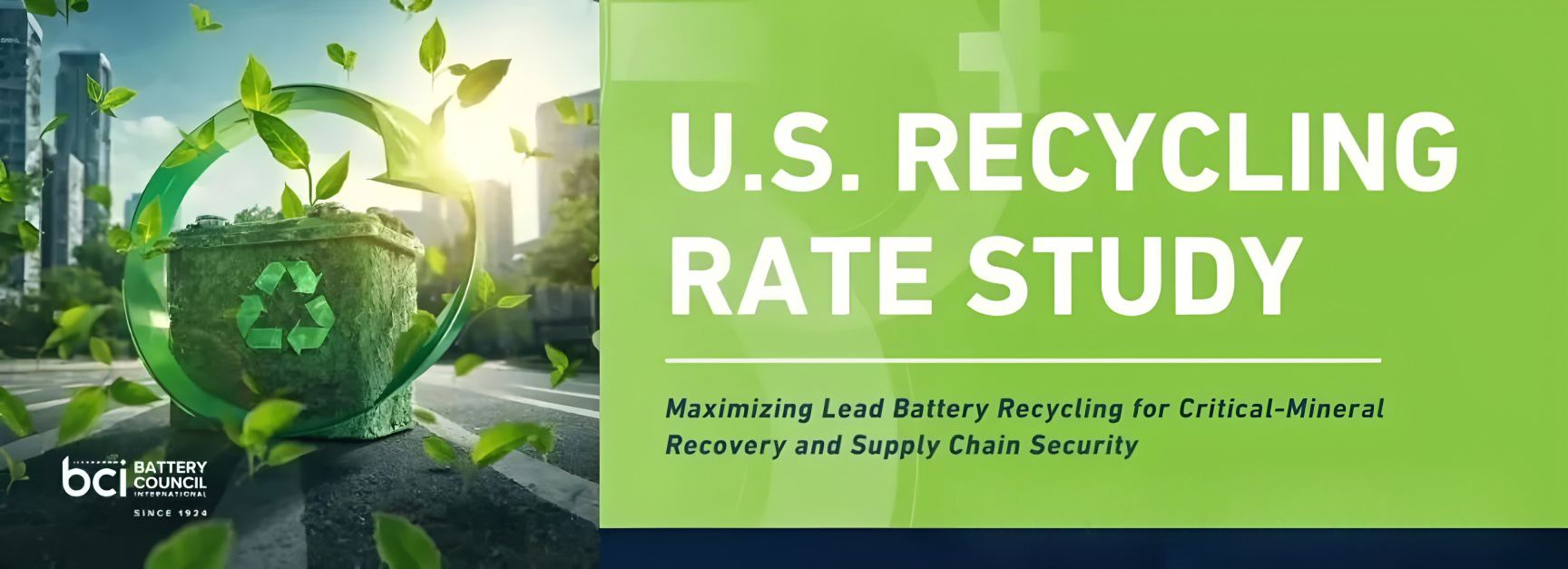
The Battery Council International (BCI) has published its U.S. Recycling Rate Study covering the 2020-2024 period, and the headline is the strongest the industry has recorded: 97.7 percent of the lead in spent lead-acid batteries is recovered and returned to new production. The study, released on August 6, 2026, puts hard numbers on a closed loop that has operated in the United States for around a century - and its lessons reach every market where lead-acid batteries are sold, recycled and remade.
KEY TAKEAWAY
Lead-acid batteries post a 97.7 percent end-of-life lead recovery rate in the United States across 2020-2024, with about 11 billion pounds of lead recovered over five years. For buyers, recycled lead supply is structural, not incidental, and recycled content documentation is becoming part of supplier qualification in every major market.
The Numbers in the New BCI Study
The study tracks five years of collection and recovery across the United States. Over that period, roughly 11 billion pounds of lead - about five million tonnes - came back from end-of-life batteries. Every year the loop returns about 174 million batteries and 2.2 billion pounds of lead to production, and new lead batteries are typically built with around 80 percent recycled material, according to BCI. By rate, BCI describes the lead battery as the most recycled consumer product in the country: long-running US Environmental Protection Agency comparisons put aluminum can recycling near 50 percent, glass near 31 percent and PET plastic bottles near 29 percent. The figures that define the loop are summarized below.
| METRIC | FIGURE | CONTEXT |
|---|---|---|
| End-of-life lead recovery rate | 97.7 percent | 2020-2024 study period, published August 6, 2026 |
| Lead recovered over five years | 11 billion pounds | About five million tonnes returned to production |
| Batteries recycled each year | 174 million units | With 2.2 billion pounds of lead per year |
| Recycled material in new batteries | About 80 percent | New lead batteries built mostly from recovered lead |
| Demand met by secondary supply | 70 percent US, 83 percent North America | The United States has no primary lead smelter |
| Collection network | More than 300,000 points | Plus 15 recycling plants and 60 manufacturing plants |
| Annual production capacity | 163 GWh US, 211 GWh North America | Supported by 62 suppliers in the chain |
| Industry footprint | 106,000 jobs, 35 billion dollars | Direct contribution of the US lead battery industry |
Why a Century-Old Closed Loop Holds
Recycling at this scale rests on infrastructure that took decades to build. BCI counts more than 300,000 collection points, 15 recycling plants and 60 manufacturing plants in the United States, with 62 suppliers feeding the chain. Production capacity stands at 163 GWh domestically and 211 GWh across North America, and the industry supports about 106,000 jobs and 35 billion dollars in annual economic activity.
The loop is also self-reinforcing. Recovered lead is cheaper to reprocess than newly mined and refined metal, and the United States no longer operates a primary lead smelter, so secondary supply covers about 70 percent of US demand and 83 percent of North American demand. A battery sold today is raw material for the next one.
The Remaining 2 Percent
The gap between 97.7 and 100 percent comes mostly from batteries that leave the system unreported or through improper exports, according to the study. The industry response is certification: since 2022, the Lead Battery 360° sustainability program has recognized 10 facilities across the chain, standardizing how recycling claims are documented.
Policy is moving in parallel. On November 7, 2025, the US Geological Survey included lead in the final 2025 list of critical minerals, and on July 30, 2026, a presidential determination directed action on potential export controls covering lead. Both steps reflect the same conclusion: recovered lead is a strategic material, and keeping it inside the loop matters.
What It Means for Battery Buyers
Three practical points follow for purchasing teams. First, recycled lead supply is structural: a network of this size does not depend on any single plant or policy cycle, which supports stable availability. Second, ask for recycled content documentation now - the EU Battery Regulation already sets a minimum of 85 percent recycled lead for SLI and industrial batteries, and our breakdown of the EU Battery Regulation compliance calendar lists every date. Third, expect the model to spread: newer chemistries such as lithium and sodium batteries are studying the collection and recovery system that lead-acid built, which raises recycling standards across the industry.
For projects that need stationary storage, the same supply logic applies: our UPS and solar storage batteries draw on the same manufacturing network and the same mature recycling channel behind these figures.
FAQs
What does the 97.7 percent figure measure?
It is the share of lead recovered from spent lead-acid batteries at end of life in the United States across 2020-2024, as measured by the BCI U.S. Recycling Rate Study published on August 6, 2026. BCI rounds the figure to 98 percent in current communications, and the long-term recovery rate is above 99 percent.
Why is lead-acid battery recycling so successful?
Collection is dense and convenient, the lead in a battery keeps its value after use, and recovered lead feeds directly back into new batteries, which typically contain around 80 percent recycled material. A century of infrastructure - collection points, recyclers and manufacturers - keeps the loop closed.
What happens to the batteries that are not recycled?
Most of the remaining share leaves the system unreported or through improper exports. The response combines facility certification through Lead Battery 360°, the addition of lead to the 2025 US critical minerals list and a 2026 presidential determination on potential export controls covering lead.
Does a high US recycling rate matter for buyers in other regions?
Yes. It shows what mature collection and recovery infrastructure achieves, and it signals where requirements are heading: the EU Battery Regulation already sets a minimum of 85 percent recycled lead for relevant batteries. Asking suppliers for recycled content documentation is a sensible step in any market.
Date Published: September 15, 2026 | Date Modified: September 15, 2026
Author: Technical Department of Western Electrical