




 Automotive
 Motorcycle
 Storage
Battery Hub
Lead-Acid Batteries Power AI Data Center Backup
Artificial intelligence is redrawing the map of global electricity use, and data centers sit at the center of that shift. Analysis by SemiAnalysis puts global data center power demand at 49 GW in 2023, on track to reach 96 GW in 2026, with roughly 40 GW of the increase coming from AI workloads. Behind every megawatt of IT load sits a quieter requirement: backup power. In China, the largest data center market in the world, lead-acid batteries carry more than 90 percent of that duty according to Frost & Sullivan estimates - and the numbers explain why.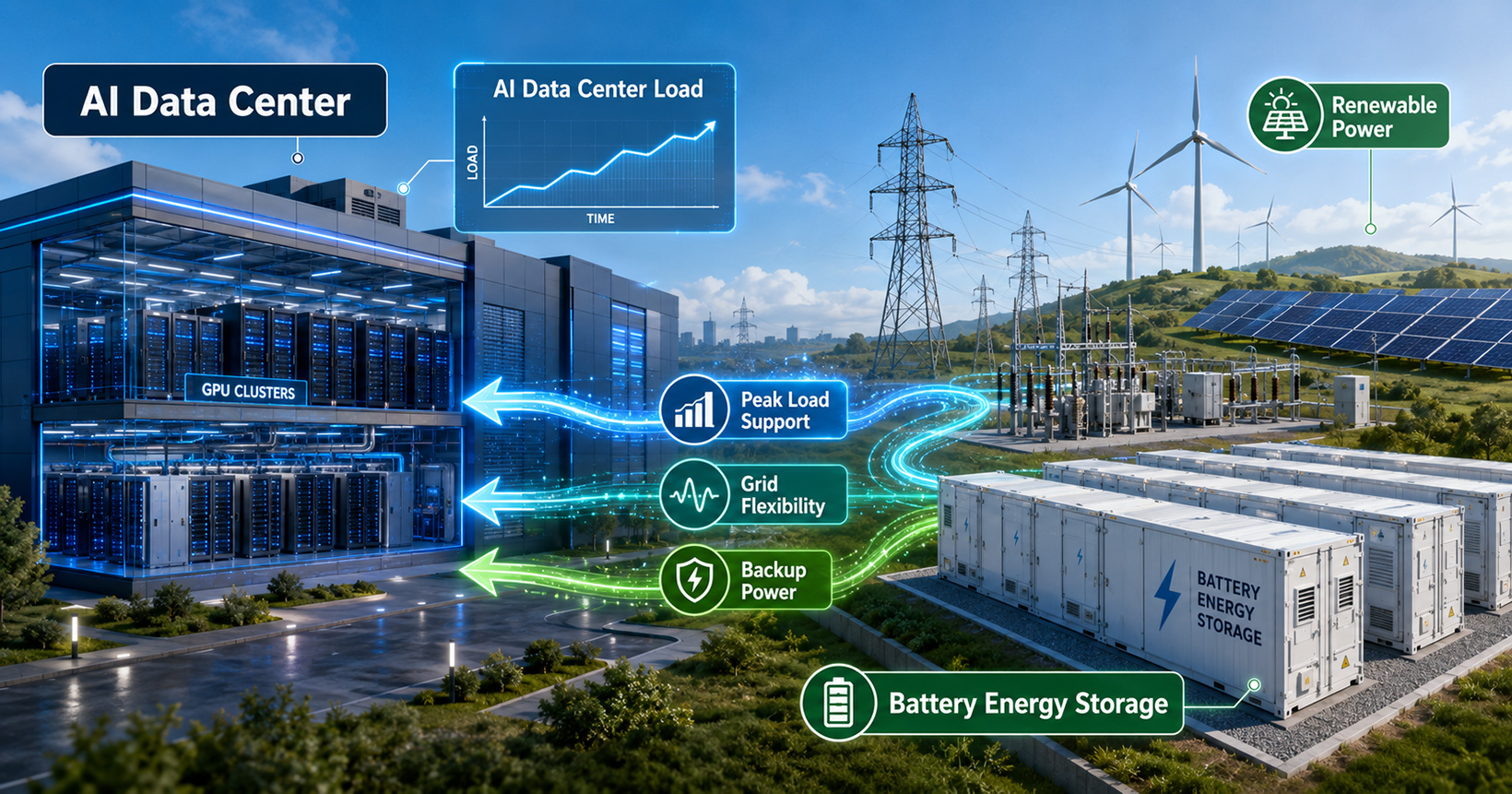
KEY TAKEAWAY
Global data center power demand is set to nearly double, from 49 GW in 2023 to a projected 96 GW in 2026, with AI adding about 40 GW of new load. Lead-acid batteries hold above 90 percent of backup duty in Chinese data centers, and data-center-grade batteries command roughly twice the price of automotive start-stop batteries - a premium the market pays for proven reliability.
The Numbers Behind the AI Power Gap
The buildout is now measurable in gigawatts. SemiAnalysis data show demand at 49 GW in 2023 and a projected 96 GW in 2026, with roughly 40 GW of the increase tracing back to AI training and inference clusters and the networking that connects them. Every added gigawatt multiplies the need for ride-through power: UPS systems, string batteries and the monitoring that keeps them ready.
The spending follows the load. Market researcher SkyQuest sizes the global data center battery market at 62.82 billion dollars in 2025, rising to 100.88 billion dollars by 2033, a compound annual growth rate of 6.1 percent. The figures that frame the opportunity are summarized below.
| METRIC | FIGURE | CONTEXT |
|---|---|---|
| Global data center power demand, 2023 | 49 GW | SemiAnalysis baseline |
| Global data center power demand, 2026 | 96 GW projected | Nearly double the 2023 level |
| AI share of the increase | About 40 GW | Training, inference and networking load |
| Lead-acid share of backup in China | Above 90 percent | Frost & Sullivan estimates |
| Data center battery market, 2025 | 62.82 billion dollars | SkyQuest estimate |
| Data center battery market, 2033 | 100.88 billion dollars | 6.1 percent CAGR, per SkyQuest |
| Recycled lead in global supply | About two-thirds | Share of global refined lead output |
| Data-grade battery pricing | Roughly twice start-stop | Premium for high-rate design and verification |
Why Lead-Acid Still Owns the Backup Room
Backup duty is demanding: batteries must deliver high power for short windows, hold float voltage for years and perform during the deepest discharge tests an operator can schedule. Lead-acid meets those terms with a supply chain that is hard to match - manufacturing distributed across every major market, replacement strings available on short notice and failure behavior that monitoring data reveal long before a string fails.
That is why lead-acid holds above 90 percent of backup duty in Chinese data centers, per Frost & Sullivan estimates. Newer chemistries, including lithium-based systems, are being evaluated for space-constrained roles, but the operating playbook for backup duty - annual discharge tests, string monitoring and hot-swap replacement - was written around lead-acid, and procurement teams know how to qualify it.
Tight Supply and Data-Grade Pricing
The supply side adds pressure. Roughly two-thirds of global refined lead output comes from recycling, so a demand surge in one sector is felt quickly across the lead market, and new high-rate battery lines take time to qualify and commission.
Pricing reflects the difference: data-center-grade batteries typically sell at roughly twice the price of automotive start-stop batteries per watt-hour. The premium covers high-rate plate design, stricter capacity verification and longer float life - engineering that stands between a facility and downtime.
What It Means for Battery Buyers
Three habits separate smooth projects from painful ones. First, size backup capacity for growth rather than for current load: with demand set to nearly double by 2026, strings specified three years ago may already be undersized. Second, qualify suppliers on data-center-grade terms: factory capacity test reports, high-rate discharge curves and float-life documentation. Third, secure supply early - with lead supply dominated by recycled metal and demand rising, lead times deserve as much attention as unit price.
For projects that need stationary backup and storage, our UPS and solar storage batteries are built for exactly this duty.
FAQs
How fast is AI growing data center power demand?
SemiAnalysis puts global data center power demand at 49 GW in 2023 and a projected 96 GW in 2026, with roughly 40 GW of the increase coming from AI workloads such as training and inference clusters.
Why do data centers still rely on lead-acid batteries?
Backup duty favors proven behavior: high power over short windows, years of float service and well-understood failure modes supported by mature monitoring. Lead-acid holds above 90 percent of backup duty in Chinese data centers according to Frost & Sullivan estimates.
Why are data center backup batteries more expensive?
Data-center-grade batteries typically cost roughly twice as much per watt-hour as automotive start-stop batteries. The premium buys high-rate plate design, stricter capacity verification and longer float life - engineering that stands between a facility and downtime.
What should buyers check when sourcing backup batteries?
Ask for factory capacity test reports, high-rate discharge curves and float-life documentation, and confirm that replacement capacity is available on short notice. With demand rising and lead supply dominated by recycled metal, lead times deserve as much attention as unit price.
Date Published: September 15, 2026 | Date Modified: September 15, 2026
Author: Technical Department of Western Electrical